A lifetime of design. A career of understanding people
Annie Behrens
I am a Venezuelan physiotherapist with over 30 years in the medical field, a career that has taken me from working alongside the Venezuelan Ballet Company, treating the particular pain that lies beneath beauty and precision, to more than two decades working in the medical field here in Australia.
For thirty years, what I loved most about being a physio was simple: helping people feel better. Understanding how a body moves, where it holds tension, and what it needs to function well and then watching someone walk out lighter than they walked in.
A few years ago, I made a change. Interior design had always been an inclination in me, not a new idea; I grew up in a house where furniture never stayed still for long, where my mother, an interior designer, would shift a piece six inches or curate a single object with such care that a space would become both beautiful and effortlessly functional. Watching her work was my first education in design, taught long before I ever called it that.
Studying interior design later in life felt less like starting over and more like finally naming something I had always understood. My physiotherapy background gave me a precise, practical understanding of how bodies move through space, and how much quiet stress an environment can create when it works against the people living in it. I have simply turned that same instinct toward rooms instead of bodies.
Making people better was the work of my first career. Making spaces better is the work of this one, and I have come to believe they were never really two different things.
Studio in Bianco
Most interior designers style a room to look good. Studio in Bianco is built on a different question: how does it make you feel; and, physiologically, why?
That question comes from a career that started nowhere near design. Over 30 years as a physiotherapist, the founder learned how light, space and the body constantly negotiate with one another; how a room's proportions, sightlines and airflow can ease tension in the nervous system, or quietly keep it switched on. That same clinical eye now reads a home the way it once read a body: light as a physiological need, botanicals as living, breathing elements rather than decoration, and layout as something the body feels before the mind names it.
It's the space in between; between clinical understanding and aesthetic instinct, between how a room looks and how it actually holds you. Not styling. Wellbeing, designed.
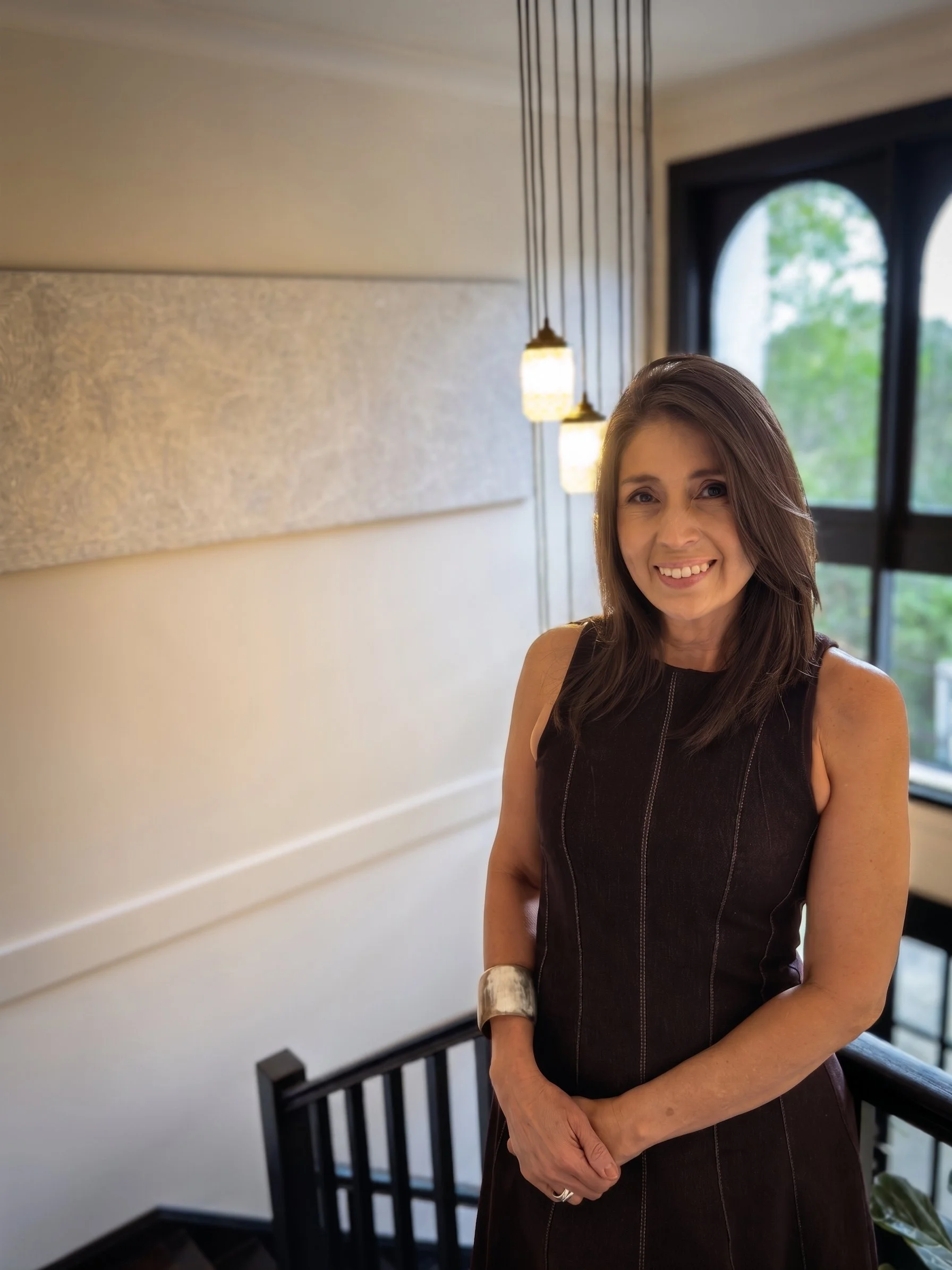
Trained to read a body. Now she reads a room